​​

Stable catalyst design for the activation of methane to syngas, hydrogen, and chemicals


    Problem Statement

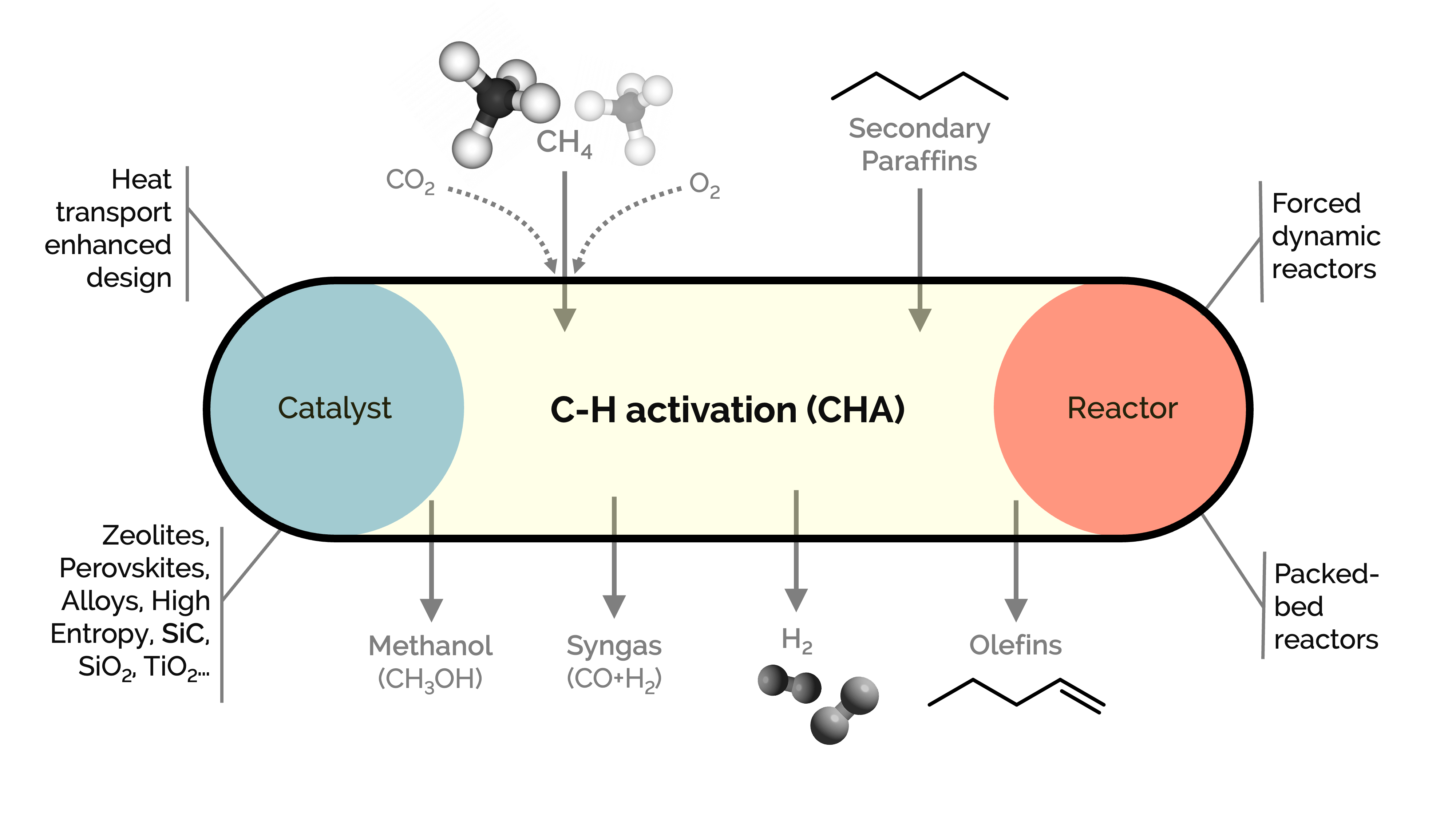
    Methane and light alkanes are species with relatively poor economic interest. Our goal is to activate C–H σ-bond to produce hydrogen, olefins, carbon monoxide, and carbon nanofibers, following different process strategies such as oxidative coupling (for olefins), CO2 dry reforming (for syngas), cracking or catalytic decomposition (for hydrogen-free of COx and sequestrated carbon nanotubes/nanofibers), cracking/co-cracking with CO or methanol. We work on developing, synthesizing, characterizing, and testing innovative catalysts with a twist of reaction engineering concepts, with a focus on multi-scale implications.

    We delve into the mechanistic insights into a series of in-house-synthesized metal-supported heterogeneous catalysts by combining them with dynamic reactors and ab initio calculations. We explore catalysts with extended lifetimes, enhanced activity, selectivity, and heat transfer. These catalysts are based on alloys-intermetallics, high entropy alloys, exsolved perovskites, and SiC, among others.

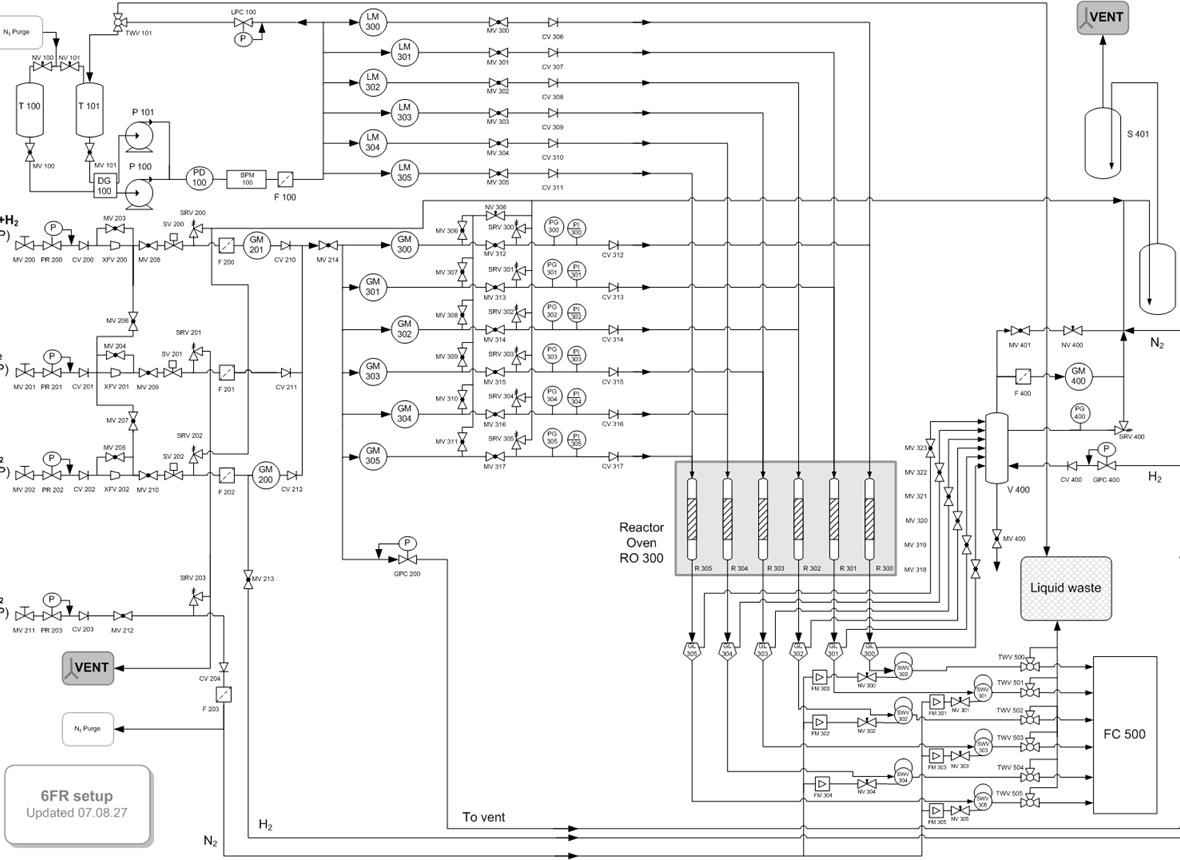
    We investigate novel reactor designs based on forced-dynamic, operando, and fluidized-bed reactors to amplify kinetic information and improve selectivity.
    CHA2023

    Goals

    • Develop a microkinetic-based modeling framework to analyze the catalyst performance
    • Scale the technical catalyst for its application in demanding exothermic (oxidative coupling of methane using SiC and spray drying) or fluidized-bed (catalytic decomposition of methane) conditions
    • Develop new catalytic concepts based on Ni-alloys (Ni-Fe, -Co, -Zn…)
    • Improve the catalyst structure-function correlations using in-situ, operando, and dynamic techniques and reactors

    Related People

    Related Publications

    Post-Synthetic Surface Modification of Metal–Organic Frameworks and Their Potential Applications

    by Figueroa-Quintero, Villalgordo-Hernández, Delgado-Marín, Narciso, Velisoju, Castaño, Gascon, Ramos-Fernandez
    Small Methods Year: 2023 DOI: https://doi.org/10.1002/smtd.202201413

    Abstract

    Metal–organic frameworks (MOFs) are porous hybrid materials with countless potential applications. Most of these rely on their porous structure, tunable composition, and the possibility of incorporating and expanding their functions. Although functionalization of the inner surface of MOF crystals has received considerable attention in recent years, methods to functionalize selectively the outer crystal surface of MOFs are developed to a lesser extent, despite their importance. This article summarizes different types of post-synthetic modifications and possible applications of modified materials such as: catalysis, adsorption, drug delivery, mixed matrix membranes, and stabilization of porous liquids.

    Keywords

    OLG CO2 CHA HCE